Three booksOne human question
When machines
think for us,
who do we become?
A bold, deeply human trilogy about what AI takes, what it gives, and how to build a mind that compounds.
Explore the books Written by Ryan Decker
A field guide for minds
that refuse autopilot.
Book three of the Cognitive TrilogyCOGNITIVECAPITALEverything That Thinks Is a GraphRYAN DECKER
01 Count the cost
→02 Invest the gain
→03 Compound the connection
The trilogy / 01—03
Not another warning
about AI. A map.
From the skills we surrender to the connections that make us human, each book takes one leg of the journey.
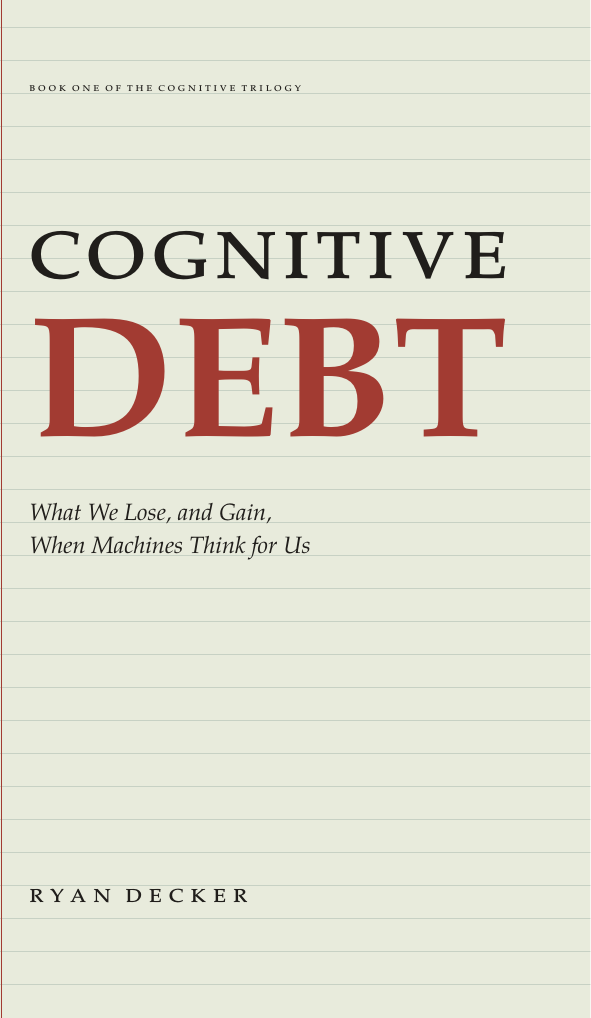
Cognitive Debt
What We Lose, and Gain, When Machines Think for Us
Writing offloaded memory. The calculator offloaded arithmetic. AI is the first tool to offload reasoning itself. This is the ledger of what that trade costs—and how to take it with our eyes open.
“The routine work we are automating away was never just output. It was the apprenticeship of civilization.”
Open the field notes
01The LineageWriting, calculators, and minds beyond the skull
02The Fluency TrapWhy ease and effectiveness are different things
03The Broken LadderWho trains the experts after routine work is gone?
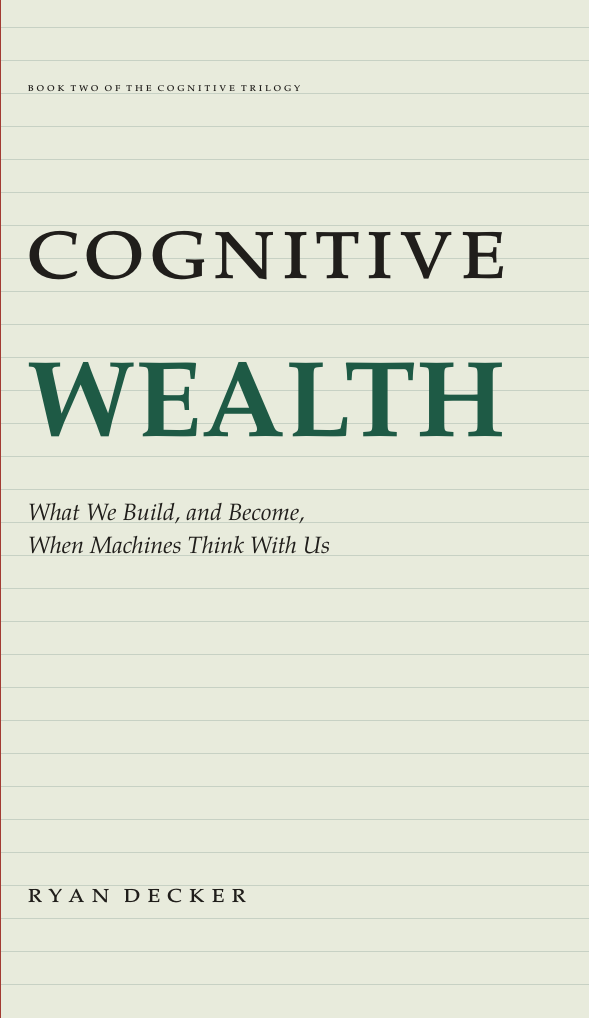
Cognitive Wealth
What We Build, and Become, When Machines Think With Us
Every great cognitive offloading has eventually repaid its debt with interest. But the interest arrives late, lands unevenly, and compounds only for those positioned to collect it.
“The debt is already on the books. This book is about earning it back.”
Open the field notes
01The DepositsWhat writing and calculation returned to us
02The InvestmentUsing AI to build capacity instead of dependency
03The ReturnWhat workers, parents, and civilization can become
Book three of the Cognitive TrilogyCOGNITIVECAPITALEverything That Thinks Is a GraphRYAN DECKER
Cognitive Capital
Everything That Thinks Is a Graph
A fact you cannot connect is a fact you do not understand. Expertise is not a pile of knowledge; it is a densely wired map. The future belongs to the people who connect before they collect.
“Nodes are cheap now. Edges are dear.”
Open the field notes
01The Graph in Your HeadWhy learning is literally edge-building
02The Craft of the EdgeTyped connections, time, memory, and meaning
03Become an Edge BuilderConnect before you collect
“Capability begins an offloading. Abundance completes it.”
— Cognitive DebtTry this / 60-second audit
Where are you
in the ledger?
Choose the sentence that sounds most like you. There is no score—only a next move.
One argument / three movements
A balance sheet
for the human mind.
The connections weakened when thought is handed over.
effort
The deliberate practice that builds those connections back.
meaning
The graph that creates new knowledge from every new edge.
The conversation continues
Stay curious.
Keep your edges.
Know someone thinking seriously about AI and the human future? Pass the trilogy along.